


Hi hi! I wanted to kick off this newsletter with a little bit of housekeeping, now that it’s been a little over a month of writing Service Continu. Thanks so much for being here! It’s always flattering and surprising when people share, subscribe, and engage, and I don’t take my place in your feed/inbox lightly!
First: I co-wrote a wine book, Wine for Good Times: An Indispensable Guide for Curious Drinkers, with the one and only André Hueston Mack, and it’s finally available for preorder from Clarkson Potter!! I’m now on to my fourth (!) book collaboration (for context, I started working on this concept in September 2024!) and this kind of project is truly a career highlight for me. Helping talented folks shape what a book should read/feel/look like really scratches an editor brain-itch that I think I’ll always have.
Second: Prix Fixe’s fourth suite is a little over a month away, which means I’m about to be deep in suite production mode! If you’re someone who develops recipes for a living, creates content about food and/or drinks, or works at a hotel/event venue/restaurant that carries a curated selection of goods in those categories, please don’t hesitate to reach out! I always love adding new folks to the guest list, and we only do two suites per year. Here’s a recent post with more details.
Moving on to the topic of this newsletter!
Over the past decade or so that I’ve spent talking to chefs and restaurant owners about the hardest parts of their jobs, the following three points have come up most frequently:
Opening the restaurant
Keeping the restaurant open
Getting people to quit stealing things (pens, soap dispensers in the bathrooms, glassware, silverware, anything not nailed down).
You’ve maybe heard the saying that restaurant years are like dog years. An establishment might not be for you or to your taste — I don’t have the hubris to suggest that my taste is representative of anyone but myself — but if it can survive on razor-thin margins long after the hype has died down in an ultra-competitive market like New York, then it is for someone.
I think of ten years as the most interesting milestone in a restaurant’s life, especially if a chunk of those years were during COVID. At this stage, most spots have been through an executive chef or two (or four), and they’ve probably hired a few different public relations agencies to push different angles about the food, drinks, and the space. The menu has probably changed quite a bit, and there may be one or two dishes that have been on since the start, and the kitchen is maybe scared to nix these because people will be pissy about it.
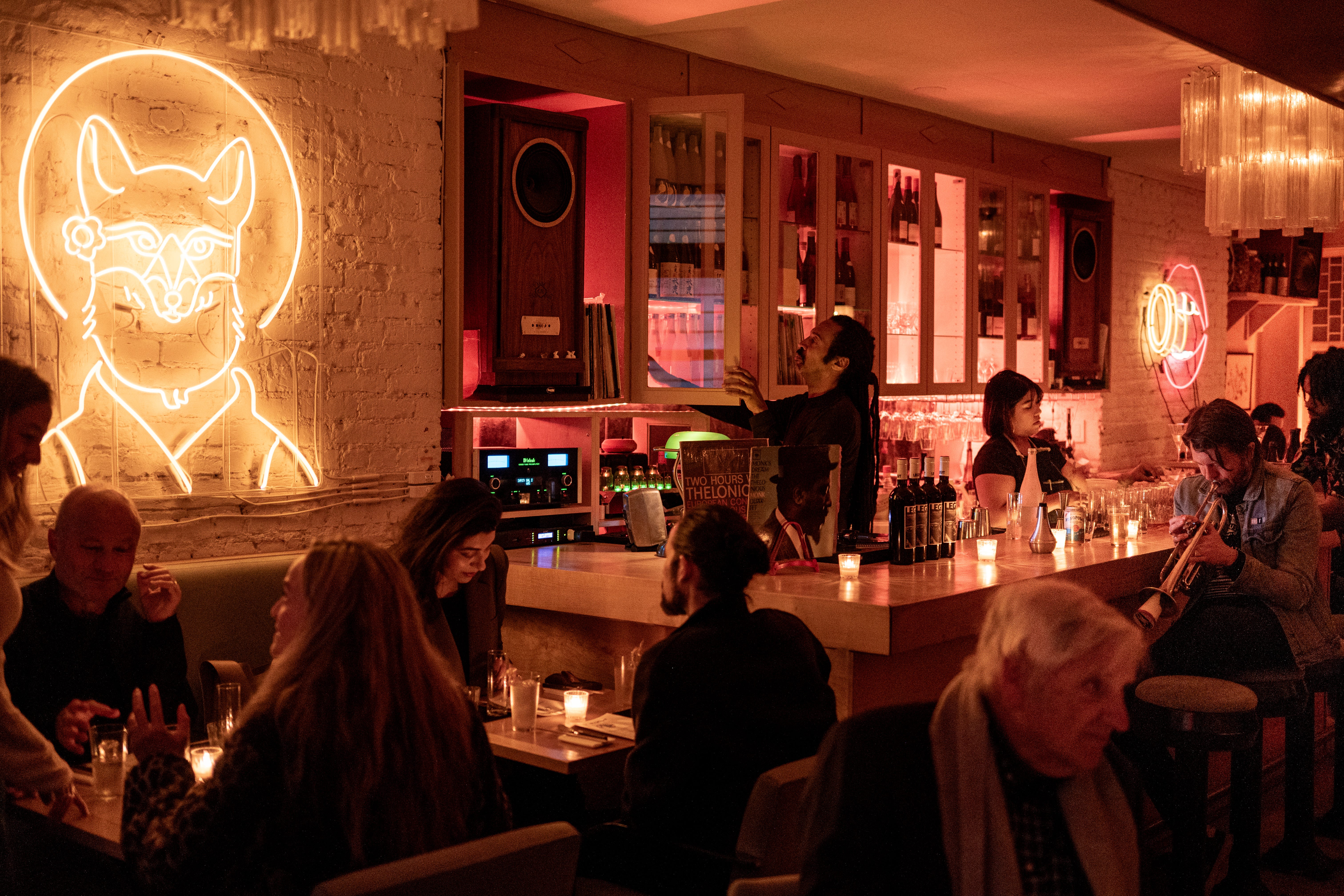
Last month, I went in for dinner at Tokyo Record Bar (which turns ten soon) for the first time in a very, very long time. I was more frequently a guest at TRB’s upstairs neighbor and former sister concept, Air’s Champagne Parlor, because it felt fun and glamorous, and I liked Champagne before I really knew what made it special.
It’s really easy to see how TRB’s premise — a prix fixe menu set to a guest-curated vinyl playlist — could get stale or feel gimmicky over the years. But I was genuinely blown away by the earnest energy in the room, and it felt more electric than restaurants with impossible-to-snag reservations or tons of TikTok hype. People were talking to their neighbors in (what appeared to be) a genuinely consensual way, comparing musical choices and notes on dishes. It felt, basically, like a different era in hospitality, and given that the new-factor wore off quite a while ago, I couldn’t help but find the whole situation remarkable.
So, I chatted with Tokyo Record Bar’s owner/founder Ariel Arce (who is also behind cocktail bar Pearl Box, and Big Pearl Caviar, in addition to serving as a partner at the NYC iteration of Rome’s beloved salumeria, Roscioli) about the restaurant’s journey over the years, to try to figure out what makes a concept like this work, almost a decade in.
OBW: What made you want to wade into the world of listening bars when you did, and how was Tokyo Record Bar different than what was already around in the city?
AA: I think High Collar was the most well-known listening bar at the time at the time, which was run by a really quirky collective of musical guys, but surprisingly, there was a real lack of audiophile spaces. There was a DJ culture, of course — NYC has always been big on that. Tokyo Record Bar was almost an amalgamation of the two.
However, when I first thought about the idea, I loved how people always wanted to interact with the records and the music, and so we switched to the paradigm of traditional DJ culture, where there are no song requests, and we made all of the music be chosen by the guest. It was kind of a record jukebox more than a traditional listening room, and much more of a communal experience than sitting in a room and listening to a DJ play records.
We got very lucky early on with a partnership with McIntosh, so our musical system was able to be top-tier. So while it was meant to be a “listening room,” it really was much more than that.


OBW: This is essentially an impossible concept to make COVID-friendly; how did you survive that period, and what surprised you the most about what worked (and what didn’t?) — are there any lasting changes to the restaurant that came out of that period?
AA: We really had to cease operations during that time. Obviously, the magic comes from everybody being in close quarters and sharing the energy. We tried doing takeout, and we tried doing it on the street, but then that magic was never the same as being in the room together. Truthfully, we laid off for a few months once we realized this, and when we brought it back exactly as it was, it was explosive. I thought the concept would die and people would never want to be back together, but of course, the opposite happened.


OBW: Ten years is such an interesting and impressive milestone for any NYC restaurant, but I find it especially interesting for a restaurant that’s doing a menu/concept like this! How would the team characterize turning 10? I’d love to share any lessons learned (or regrets, if they have any you’d like to share!)
AA: Truthfully, we have had many different iterations over the years, and I think the big lesson is to be flexible. It’s important to stay true to your initial creation, but when you need to evolve, you must be willing to. We have had multiple chefs, gone through Covid, changed concepts, obtained a liquor license, had to change prices, the list goes on, but we still have original employees and believe that the spirit is paramount and continuing to invest in it is integral.
OBW: Stepping into the kitchen of an already well-established restaurant concept can be daunting; talk to me about Chef Ignacia Valdez’s reign!
AA: She’s just such a natural. Chef Ignacia has such a strong vision for her food and is very playful with the format. We’ve had three chefs before Ignacia, and each one had their own distinct style and flair. She is perhaps the most elevated and technical of all our chefs and really grasps the intersection of the musical and food experience. Music should make you feel good, and food should make you feel good, and I think she does that with ease.
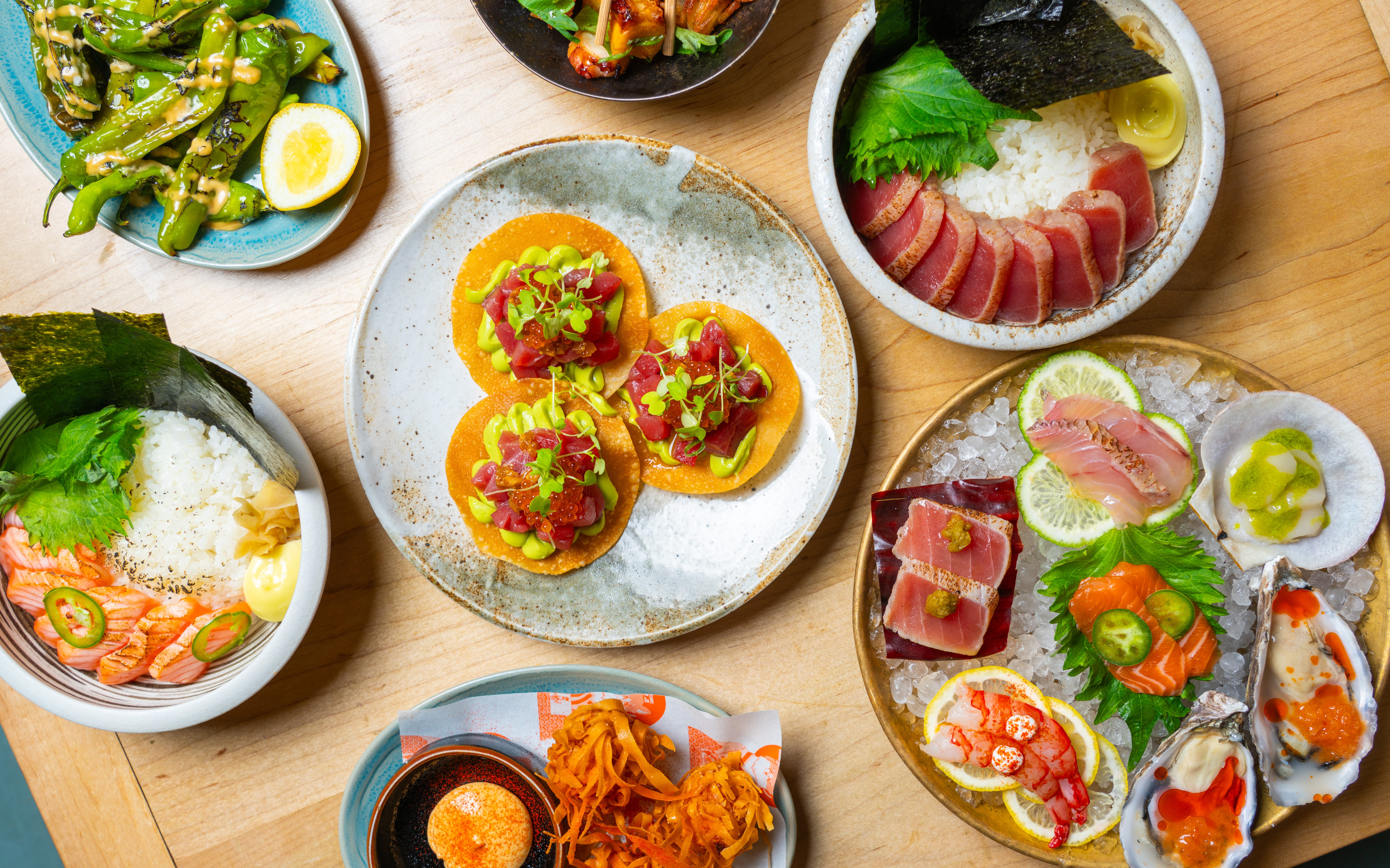
OBW: Ok, last question — are there any dishes that have stayed on TRB’s menu for the past decade or so? Or any current dishes inspired by early menu items?
AA: Our most consistent dish, and perhaps New York’s worst-kept secret, is Tokyo Record Bar’s surprise pizza at the end of the meal. When we first opened, tasting menus tended to favor delicate portions, and one of the most common refrains was that guests left hungry and stopped for a slice on the way home. Tokyo Record Bar has never been about being overly precious. We want people to leave feeling genuinely satisfied in every sense, so instead of sending them out for that post-dinner slice, we decided to bring it to them.
If you’ve recently been to a restaurant that has hit a big milestone (10, 15, 20 years?) but still feels magical, I’d love to hear about it in the comments. My next newsletter is about the one topic I think I get asked about more than any other — where to host a birthday/brand event/work dinner, as in, private dining rooms! I’m going to be sharing my favorite PDRs in New York City, and what kinds of gatherings I personally feel they work best for (size, vibe, minimum bev/food spend…). If you have a favorite PDR in the city, drop me a note, I’d love to hear!
LOVE this, and more of it, please! So refreshing to read about a restaurant that's not the shiny, new, trendy thing.